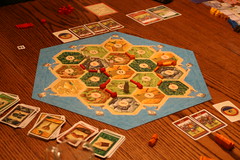
 One of my favorite discussions at UnGeeked Elite in Chicago was by Tom Tentoglou about Gamification, or adding game mechanics into business in order to increase engagement and participation. Gamification isn’t about building games (necessarily), it’s about using aspects of games that people find enticing. It’s not really news that people are motivated by achieving things (just look at high-powered stock brokers). But these motivations can be added to just about anything to increase participation or encourage people to do things you’d like them to do.
Popularity of Gaming
Gaming is massively popular. World of Warcraft, an online MMORPG (massively multiplayer online role playing game) — think D&D online, has over 12 million players (according to Wikipedia). Similarly, Farmville (on Facebook) has over 62 million active users (although that may just be people who have the application installed?). The point is: people like to play games and there are a lot of different types of games that people play.
Motivations Differ
Clearly not everyone is going to be into war games where you shoot everything that moves. Likewise, even with all it’s active users, Farmville is also not for everyone. People play games for different reasons. A person may play different types of games for different reasons or may like all of them because they have the same type of motivation. Nick Yee has broken down the motivations into 3 major types: achievement, social and immersion, each with their own sub-motivations. Some people play games to socialize and build relationships. Others play games to achieve status and power or to accumulate “things.”
Examples of Gamification
Gamification is all around us, both online and offline. Sales teams use game mechanics to entice achievement with quotas and having a “leaderboard” with a list of where everyone falls in relation to everyone else. Gamification is also used on websites like Facebook and LinkedIn to encourage people to do certain actions. For example, on LinkedIn, when you first create an account (and even after), you see a bar that shows how much progress you’ve made towards a “complete” profile:

Seeing this bar at less than 100% can be a very strong motivator to take what actions you need in order to finish your profile.
Facebook uses game mechanics all over to entice people to like, share and comment (and otherwise interact) with content on their site. Every post that you see on your Facebook home page shows how many likes and comments it has and posts which have more engagement show up at the top of your feed (unless you set it to show most recent instead of most popular).
 These mechanics not only make it more likely that someone will want to comment or like a post that’s already been liked or commented on (because it shows up higher in their feed), it also entices content providers to write content that’s more likely to get engagement (win-win all around).
Facebook also shows how many fans pages have and how many friends that people, which are strong enticements for both to increase those numbers (even at the expense of quality).
How to Apply to Your Business
Game mechanics can be applied to just about any business. First, you have to understand what motivates your customers and audience. You may have different segments which are motivated in different ways. Identifying these segments and their motivators will help you understand what enticements you can use to encourage participation. These motivators can be used online on your website and in your social media, and they can also be used offline in your marketing and business processes.
Where else do you see gamification and how do you think it’s used best?
(photo by Randy Son Of Robert, on Flickr)